
ABSTRACT OF PRESENTATION 2026
PRINCIPLES FOR PRESENTATIONS

THE "LOST" GOLDEN AGE OF GLOBALIZATION
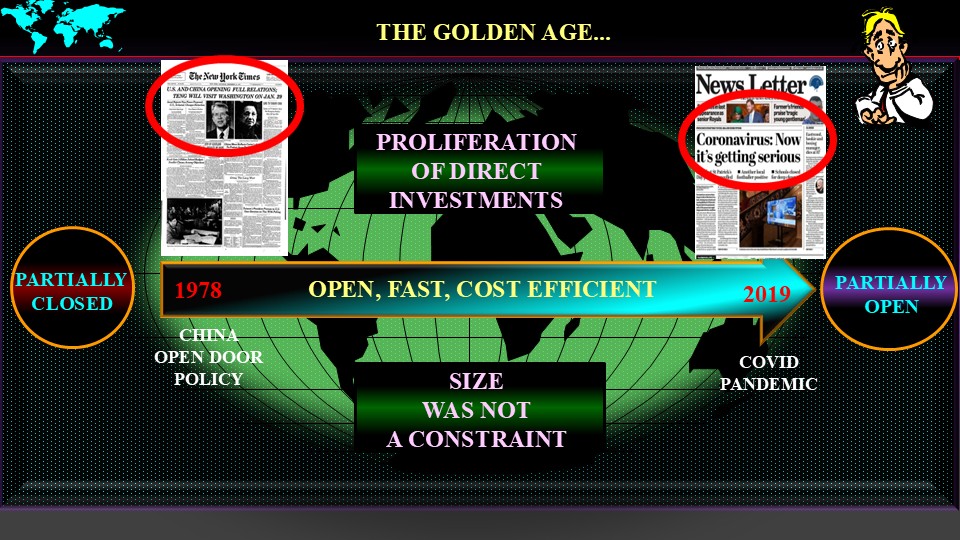
The golden age of globalization is defined as the period spanning from China’s opening-up policy in 1978 to the COVID-19 pandemic in 2019. During these 40 years, the world was generally open to trade, investment, travel, and ideas. Export strategies were complemented by a surge in direct investment that enabled the development of major countries like China. The business model was based on openness, speed, and cost efficiency. The size of a country or a company was not a barrier to participating in this globalization and achieving success.
THE MEANING OF A FRACTURED WORLD ECONOMY
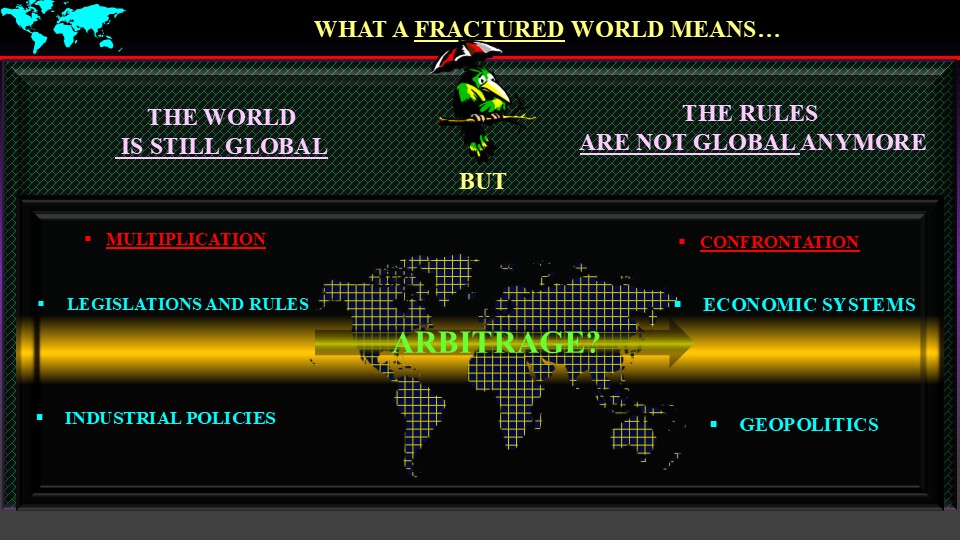
An open economy necessarily leads to the specialization of business models. When this specialization primarily involves supply chains, it creates a sense of vulnerability. It became evident after the COVID crisis and has been cited as a political argument in several countries. The result has been a proliferation of rules, legislation, and industrial policies. In this new, fractured environment, the economy remains global, but business rules no longer do. We are witnessing a clash of economic systems and the subjugation of economic decisions by major political powers.
A NEW PARADIGM FOR BUSINESS
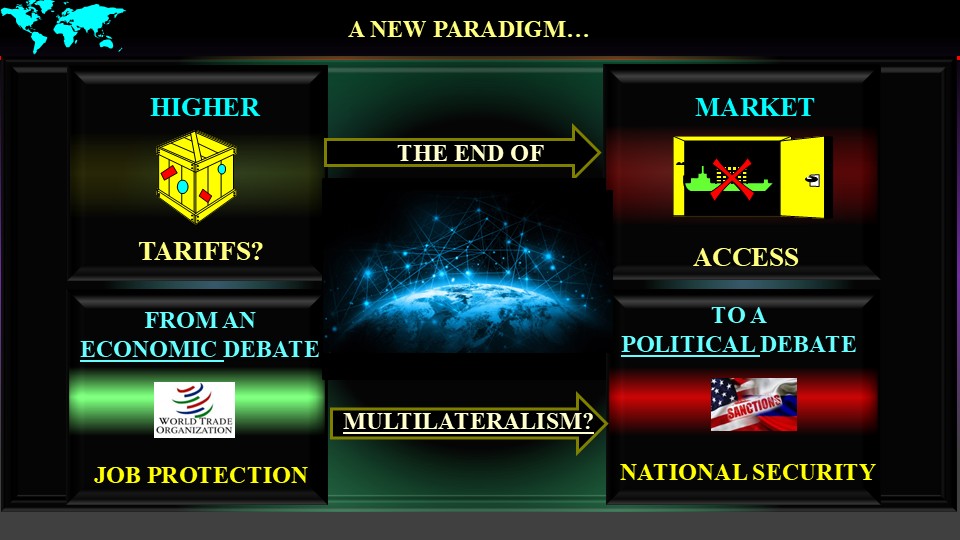
In this New World, tariffs are undeniably a violation of international trade. However, market access is also being called into question, as governments are increasingly determining the conditions under which foreign companies may operate in their domestic markets. Furthermore, economic tensions between states used to focus primarily on labor protection in the event of abusive foreign investment. These issues were primarily addressed within the framework of the World Trade Organization. Today, conflicts are increasingly political and grounded in the concept of national security (as in the cases of Huawei or TikTok in the United States). Each state has its own conception of security, and international arbitration procedures are virtually nonexistent.
A MULTILAYER GOVERNANCE OF THE WORLD
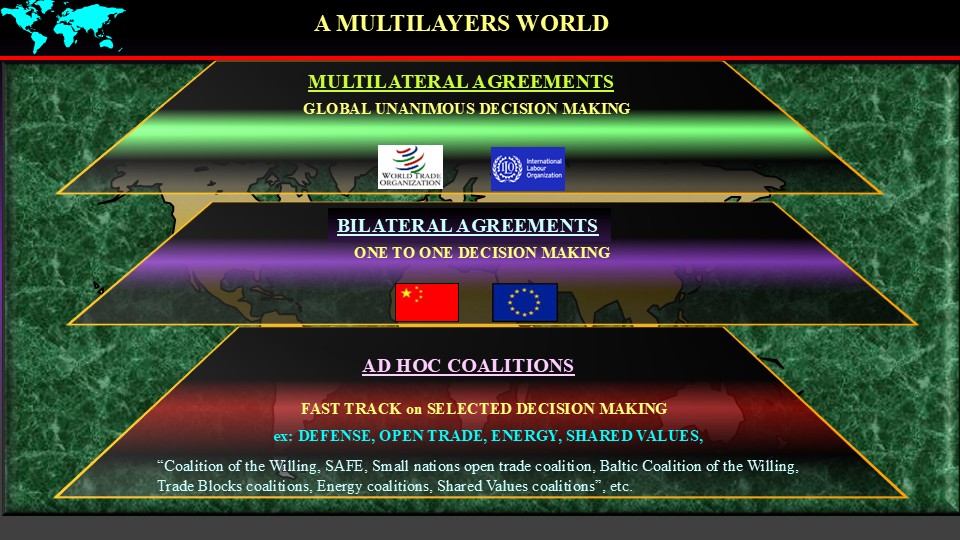
The governance of the global economy will now unfold across multiple levels. First, there are multilateral agreements that seek global decisions adopted by all countries. This is the case with the World Trade Organization or the International Labour Organization. Next, there are bilateral agreements between individual states, such as China’s nearly 30 such agreements, and between regional economic blocs, such as the European Union and Mercosur. Finally, there are ad hoc coalitions that bring together a small group of states sharing common economic, security, or political concerns and seeking to prioritize rapid decision-making.
AN AFFORDABILITY CRISIS
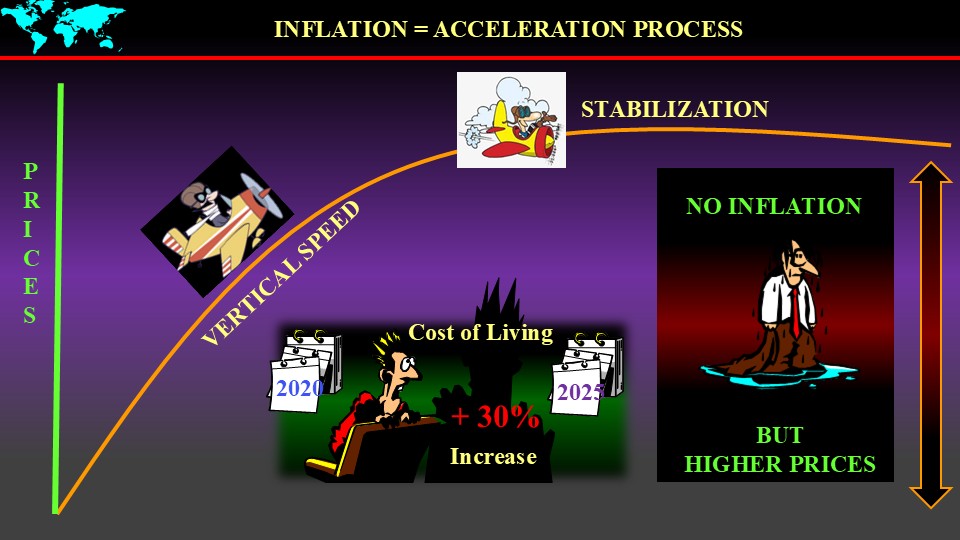
In theory, inflation is an annual process of accelerating prices. It means that, much like an airplane taking off and then reaching cruising speed, the economy may temporarily experience low inflation alongside high prices, as these are the result of past inflation. So, in practice, people mainly look at the cumulative price increase over several years. This is the concept of affordability. In most countries over the past five years, prices for basic goods have risen by 20 to 30 percent, and sometimes more. It is this high cost of living that has a significant psychological impact on consumers and generally shapes their decisions about whether to trust businesses or governments.
THE BUSINESS IMPACT OF TARIFFS
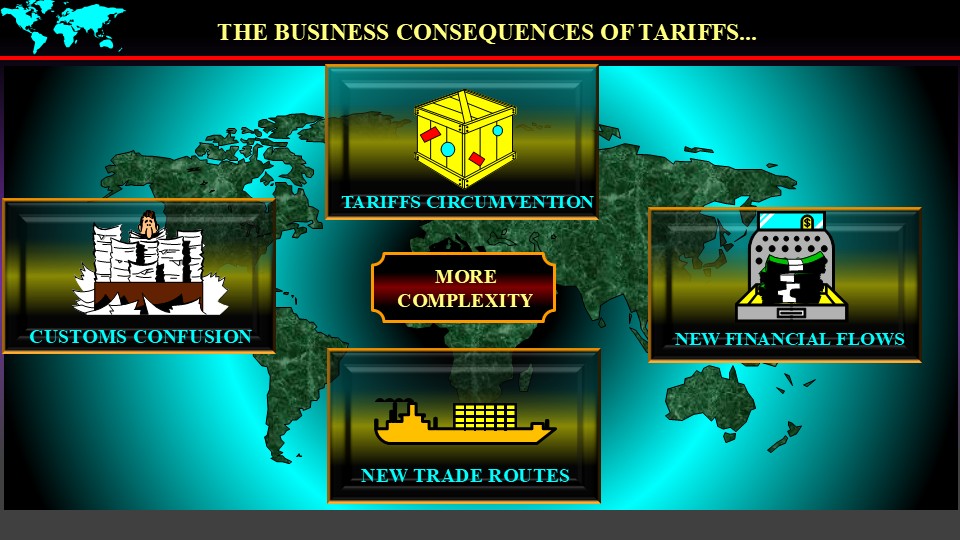
The proliferation of tariffs and confusion over the legal bases justifying them create an increasingly complex and unpredictable environment for businesses. This confusion exists among customs authorities, for whom it is not always clear which system to apply; along trade routes, which shift according to prevailing tariffs; and in financial flows, which follow new trade routes. Furthermore, varying rates across countries create opportunities for tariff circumvention via alternative routes. For businesses, this new complexity essentially translates into increased costs, risks, and delays.
PAYING FOR INTEREST RATES ON THE DEBT

Most major countries, except Germany, now have a debt-to-GDP ratio exceeding 100%. For a long time, governments paid little attention to debt growth, which was largely used to finance social protection and address exceptional events such as the COVID-19 pandemic. However, more recently, rising interest rates have created new pressure on budgets. In the United States, 15% of the budget is now devoted to debt service, and in France, 16%, which is more than the national education budget. Public debt, which for many governments had been an issue to be addressed by future generations, has now become an immediate problem due to interest payments.
THE ATTRACTIVENESS OF THE US MARKET
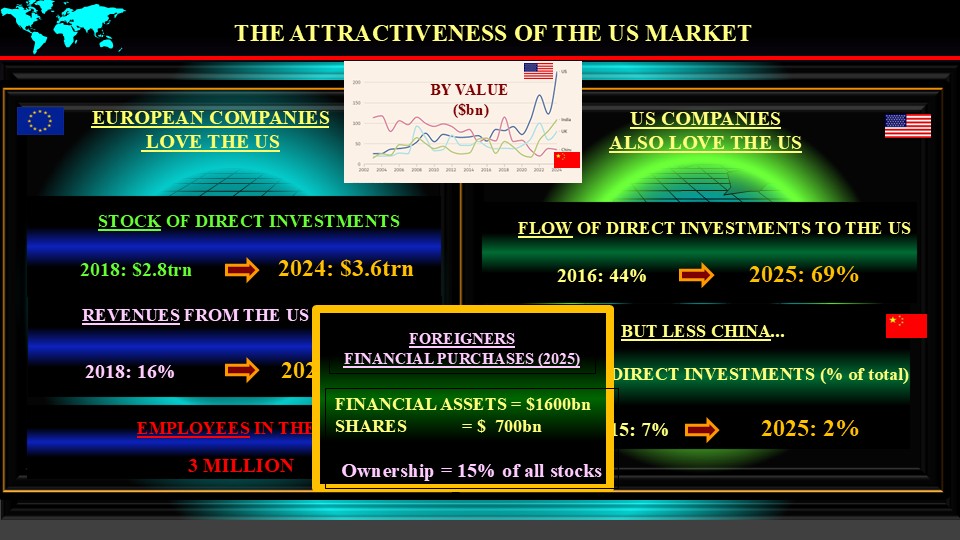
Despite tariffs and political uncertainties, the U.S. market remains arguably the most attractive in the world. For example, European companies increased their direct investments in the United States by 50% between 2018 and 2024. They generally derive nearly 20% of their revenue from the U.S. market and employ 3 million people there. Even U.S. companies are increasingly drawn to their domestic market. Between 2016 and 2025, the share of their direct investments in the United States rose from 44% to 69%. The appeal of the U.S. market is also bolstered by the challenges of operating in other markets, such as Europe—due to its overregulation—and China, where the domestic market is becoming increasingly competitive for foreign companies.
ELECTRICITY IS THE NAME OF THE GAME
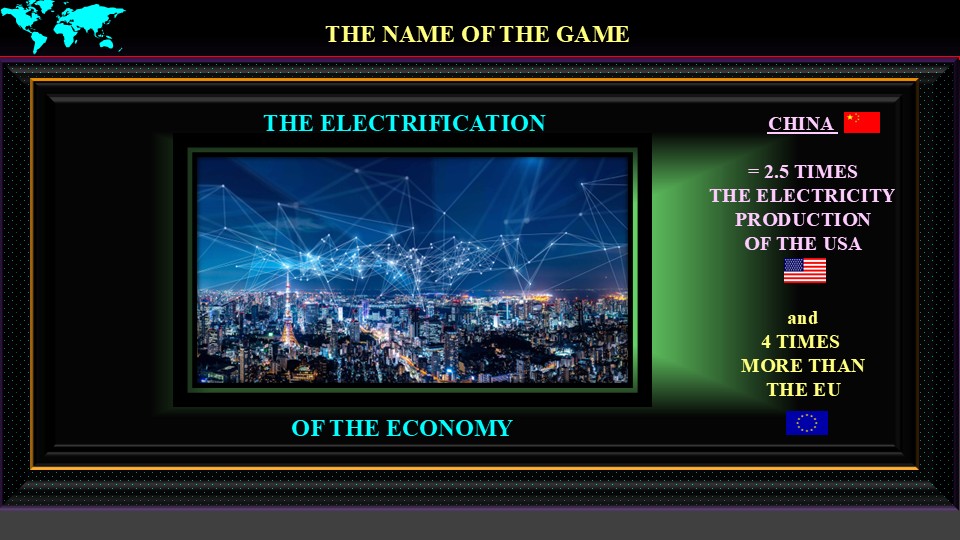
The electrification of the economy is likely the greatest energy transformation of modern times. China seems to have understood this before many other economies: it now produces 2.5 times more electricity than the United States and 4 times more than Europe. This strategy is also evident at the corporate level, with companies betting on electric power through the production of solar panels, wind turbines, and batteries. The automotive industry is another example. In three years, it has doubled electric vehicle production to 12 million. This sector now accounts for 50% of China’s economic profits. A company like BYD employs more than 900,000 people (eight times as many as Tesla), including 120,000 in research and development. However, the Chinese domestic market is extremely competitive and relatively small. This drives companies to export their excess production on a massive scale, particularly to Europe.
THE CONSEQUENCE ON BUSINESS MODELS
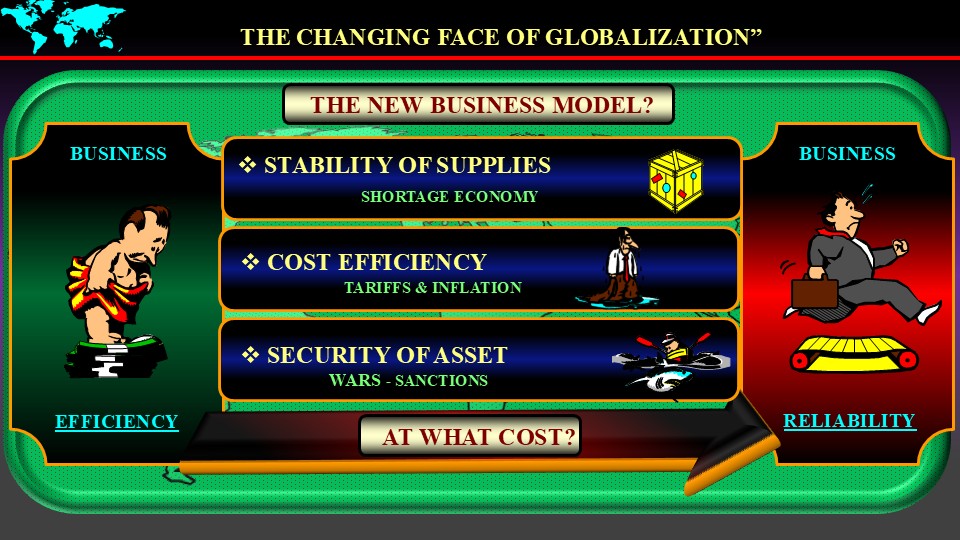
In such an environment, companies must reevaluate their business models and prioritize the reliability of their relationships alongside efficiency. It involves focusing on the stability of the value chain—particularly suppliers—maintaining cost efficiency despite tariffs and inflation, and, in the current geopolitical context, securing assets. The challenge for companies is to coordinate these different strategic levels while keeping costs under control.
THE COMPANY OF TOMORROW

The company structure of tomorrow will be hybrid, combining the different new requirements of clients, employees and governments.More employees will want to work in the periphery of companies, combining the requirements of business and the aspiration of a better work-life balance. Such a model raises many uncertainties, especially in maintaining a coherent corporate culture where people feel they are treated equally regarding decision-making, promotion or reorganization. If profit remains a fundamental objective, it must be combined with societal goals. Maintaining an appropriate balance between these two sometimes conflicting objectives will be the biggest challenge for business leaders in the future. Consequently, such a multidimensional new structure will imply significant disruptions in the working attitudes of management and employees and will probably call for new competencies.
CONSUMERS HAVE THEIR OWN PRIORITIES

Consumers are not passive and force new business models upon companies.The circular economy is one example of how consumers force companies to introduce sustainability and environmental protection in their value chain and business proposition. It is part of a more significant movement advocating ESG (Environmental, Social, Governance) policies. Companies should consider society's priorities for broader issues such as climate change, transparency or ethics. More precisely, the security of products (through certification processes, including health and sanitary standards) and transparency will gain importance. Consumers will be adamant about better knowing and monitoring how a product is manufactured and distributed until it reaches them. And they will hold companies accountable for managing this new value chain approach.
CONSEQUENCES ON COMPETITIVENESS
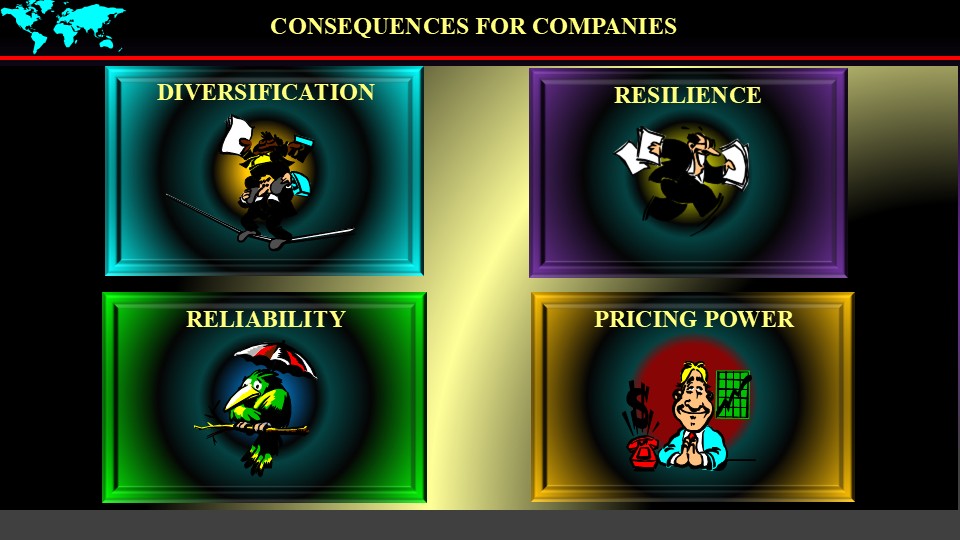
To maintain their competitiveness, given the changes in the current business environment, companies must prioritize diversifying not only their value chains but also their customer bases. Faced with market volatility, they must demonstrate resilience. As production costs are likely to rise, they will also need to develop the ability to pass on certain price increases to customers and gain their acceptance. In this context, reliability has become the added value that can convince business partners to pay more.
SIMPLIFY FOR EFFICIENCY
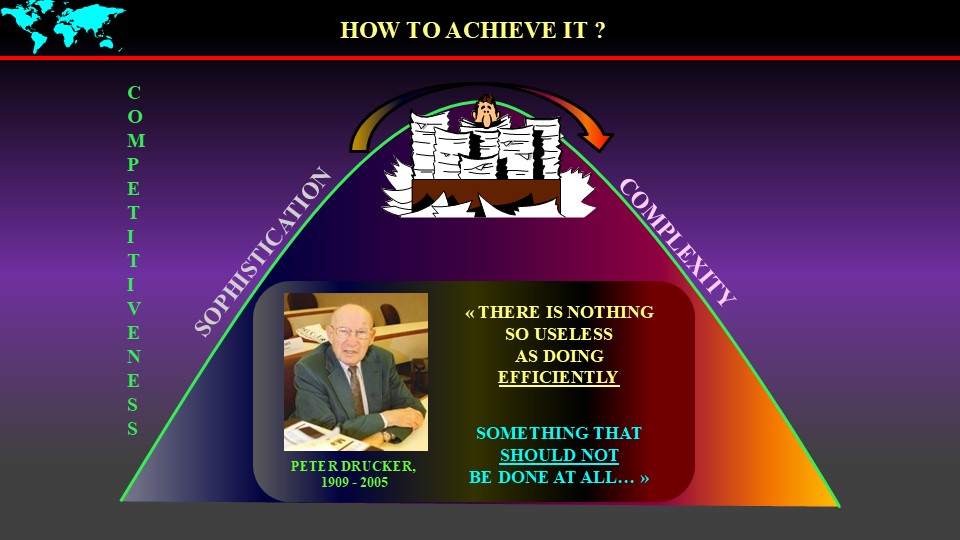
Simplifying business operations and relationships between partners and customers is another strategy for competitiveness. In an increasingly complex environment where technologies build upon one another, sophistication quickly appears to be nothing more than complexity. As Peter Drucker said, there is nothing more useless than doing efficiently something that should not be done at all. It implies that every company must consider reducing the complexity of its processes before adding new ones. This policy applies equally well to businesses and governments.
A MINDSET FOR COMPETITIVENESS AND SUCCESS

This world competitiveness landscape implies new attitudes and new approaches to managing people. It is not only being good at "what you do" that counts, but also being good at "what you are". Winners will need to deal with more uncertainty and a higher degree of discomfort. They should nurture a healthy sense of ambition for their organization and themselves. Resilience and the ability to quickly re-invent oneself are crucial to success. Companies also need to stimulate a mindset of imagination (why not?), of energy (why not now), and of commitment (why not me). In addition, the “legality” of the actions - conforming to the law - is no longer enough in a world where public opinion also demands "legitimacy" - adapting to a higher standard. In such a world, companies will need to answer the broader question: "why us"?
NO PROCRASTINATION
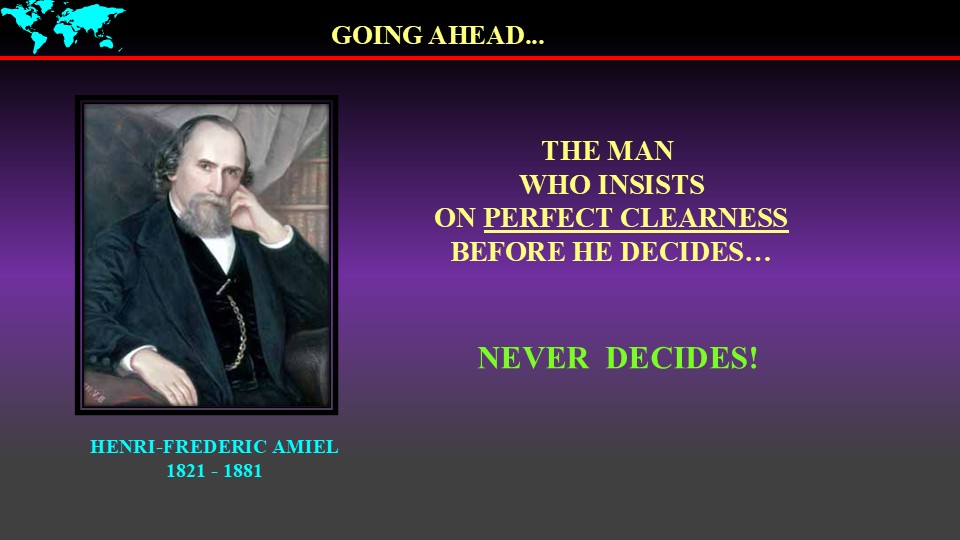
The uncertainties and volatility of the global economy and business world cannot serve as an excuse for failing to make decisions or for lacking a forward-looking strategy for companies. It means that every decision involves an element of uncertainty that cannot be eliminated. It must be accepted because, ultimately, profitability is the reward for taking risks. However, this decision-making process must be transparent, swift, and clearly explained at all levels of the company, to its partners, and to its environment. Being a good leader also means inspiring people to follow you.