
Books

Available on Amazon (click for redirection)
You will find below a short summary of the first and last chapters of the book:


And a glimpse at the last chapter of the book:


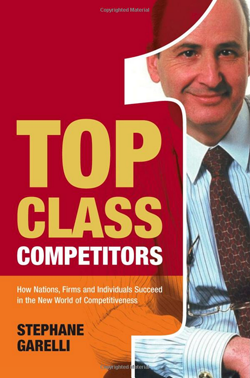
Competitiveness is the most used and abused term in modern economics. Three decades ago it was unheard-of; today a Google search produces more than 35 million matches. Competitiveness has taken the world by storm with frequent name-checks from politicians, business leaders, journalists and academics alike. But is competitiveness a fad or for real? And, incidentally, what is it exactly?
Competitiveness, as defined in this book, is the ability of a nation, company or individual to manage a totality of competences to attain prosperity. Success today depends on more than managing a few well-established core competencies. Along with traditional policies, a nation must also tackle education and security to sustain economic development. A company must manage ‘soft’ issues such as brands and perceptions to beat the competition. And individuals must reinvent themselves and expand their skills to survive. These fields of economic research did not exist a few decades ago. Today, competitiveness makes the link.
TopClass Competitors is a journey through the brave new world of competitiveness. What are its historical origins? How does it impact the management of a nation? How do companies thrive on it in an international environment? What is the impact on work structures and value systems? Above all, is there a competitiveness mindset? Exploring how the concept works and how its issues are intertwined, Stéphane Garelli shows why competitiveness is the most powerful tool available to unleash new levels of prosperity for nations, profit for companies and success for people.
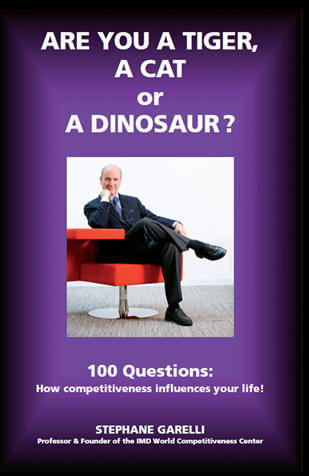
"ARE YOU A TIGER, A CAT OR A DINOSAUR?"
100 questions: How competitiveness influences your life!
Competitiveness, like social networks, sustainable development or climate change, is a topic that has captured the world. Politicians, businessmen and media constantly refer to it. What does it mean? How does it influence our lives?
The goal of this book is to move beyond academic analysis and illustrate the day-to-day realities of competitiveness. What are the most commonly asked questions? This book offers 100 of them. Some deal with competitiveness (Is boring competitive?), while others deal with leadership (Is failure the price of success?), society (Do we work too much?) and the world around us (What are things worth?). Finally, some are more personal (Are you irreplaceable?).
The style avoids technical terms since economics need not be complicated or boring to be relevant. The answers stress the impact of competitiveness on our daily lives. Why am I concerned? What can I do about it?
TABLE OF CONTENTS
1. Are you a Tiger, a Cat or a Dinosaur?. 11
2. Are you as competitive as Usain Bolt?. 14
3. Is competitiveness like playing snooker?. 16
4. When was economics first recorded?. 18
5. When was work rationalized?. 20
6. Can we trust statistics?. 22
7. Does economics have a moral side?. 24
8. Did Darwin defend only the fittest?. 26
10. What shape will the new economic cycles take?. 30
12. Can you be rich and useless?. 34
13. Is boring competitive?. 36
14. Is “societal capitalism” the future?. 38
15. What are the roads to prosperity?. 41
16. Have women been victims of the plow?. 43
17. Is the world becoming less poor?. 45
18. Where do our products come from?. 47
19. Should we care about “Made in”?. 49
21. Are low wages necessary to be competitive?. 53
22. Is the South becoming more competitive?. 55
23. What products do the less poor need?. 57
24. Is Africa the next Eldorado?. 59
25. Are you part of the middle class?. 61
26. Where does the new middle class come from?. 63
27. Is the shadow economy useful?. 65
28. Is tourism a false friend?. 67
29. Should we fear international investments?. 69
30. Should an economic strategy be aggressive or attractive?. 71
31. What is the longest word?. 73
32. Is a product more than a product?. 75
34. What are things worth?. 79
35. Is there a future for small countries?. 81
36. What is the recipe for a country’s success?. 83
37. Do business leaders think?. 86
38. Are we asking the wrong questions?. 88
39. Is thinking dangerous?. 90
40. Are you a born leader?. 92
41. Should political leaders be better educated?. 94
42. What makes a business legitimate?. 96
43. Should managers receive honorary titles?. 98
44. Does the learning organization exist?. 100
45. How to avoid just doing more of the same?. 102
46. Are specialists dangerous?. 104
47. Should companies be in the countryside?. 106
48. Do traditional sectors innovate?. 108
49. Why do large companies disappear?. 110
50. Who are your friends and who are your enemies?. 112
51. Is ambition acceptable?. 114
53. Is failure the price of success?. 118
54. What does a salesman who doesn’t sell look like?. 120
55. Should we worry about details?. 122
56. Do you need it or do you want it?. 124
57. How can a good idea turn into a bad one?. 126
58. Is austerity a vice or a virtue?. 129
59. What is the legacy of corporatism?. 131
60. Are you a neoliberal?. 133
61. Can politicians decide quickly?. 135
62. Why should we be productive?. 137
63. Is inflation addictive?. 139
64. Can consumers also produce?. 141
65. What do the Japanese think about?. 143
66. Why is English so successful?. 145
67. Do you belong to the third culture?. 147
68. How do value systems evolve?. 149
69. Are our children intelligent?. 151
71. Do you understand young people?. 155
72. Is the new generation that bad?. 157
73. How about parachuting a laptop?. 159
74. Are inequalities dangerous?. 161
76. Is water tomorrow’s blue gold?. 165
77. Should we eat our dog?. 167
78. How many friends do you need?. 170
79. Are people easily deceived?. 172
80. Famous or infamous on the Internet?. 174
82. Should we get up at 5 a.m.?. 178
83. Are you irreplaceable?. 180
84. How to reinvent oneself?. 182
85. Do you have market value?. 184
86. Do you really need an office?. 186
87. How should you dress at work?. 188
88. Making a speech or speaking to people?. 190
89. Does success have its own rules?. 192
90. Can one be overeducated?. 194
93. Were you born at the wrong time?. 200
94. Are you hooked on digital?. 202
96. Is divorce a good business?. 206
97. Is there a future for handwriting?. 208
98. Will paper disappear?. 210
99. Is art a good investment?. 212